The Secret Ingredient to Confident Cooking: More Than Just an Oven Glove
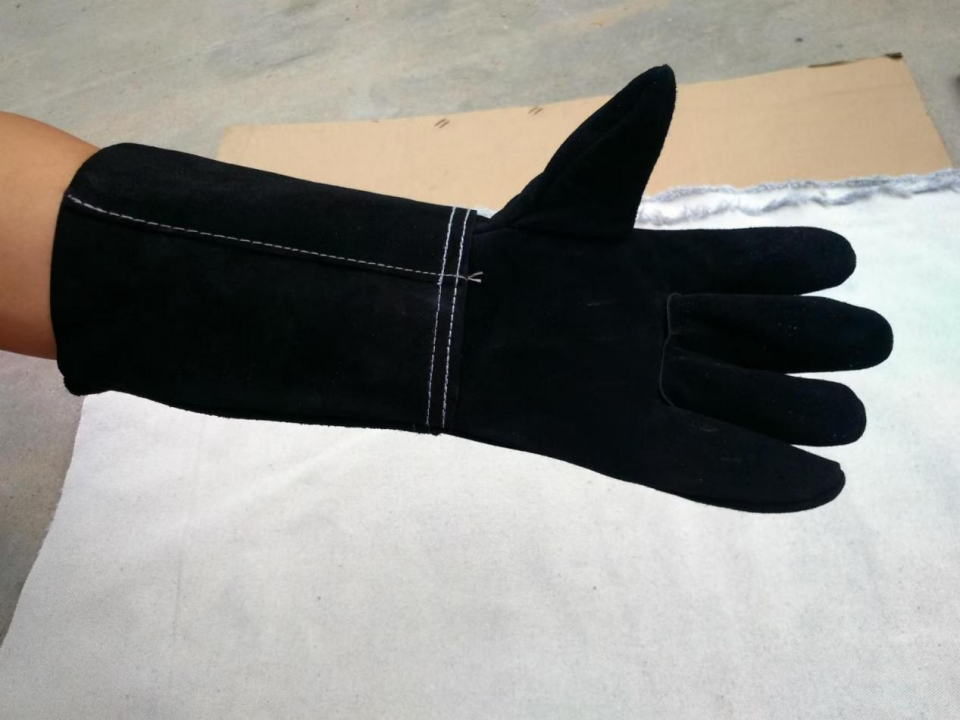
Why Cow Split Leather Outperforms Fabric Gloves
Fabric oven mitts fade, absorb moisture and offer little defense against sharp edges or sparks. Cow split leather stands out as high-heat protective material.
Natural Heat Resistance: Dense fibrous structure blocks both radiant oven heat and conductive heat from hot cast-iron pans and grills.
Superb Durability: Abrasion-tough material resists scratches from oven racks and pizza stones. Instead of fraying, it develops unique patina with long-term use.
Secure Grip & Flexibility: Textured suede surface provides non-slip hold on slippery cookware. Well-balanced design keeps your hands flexible for safe handling.
Modern-Oriented Design
Extended cuff shields wrists and forearms from burns when reaching deep inside hot ovens.
Heavy-duty white reinforced stitching improves seam strength for repeated use.
Cuff woven logo marks quality for practical yet stylish kitchen gear.
Wide Application
Not limited to oven baking. Perfect for outdoor barbecues, fireplace firewood handling and smoker maintenance. One glove serves indoor cooking and outdoor grilling scenarios.
Cooking comes from passion. Good protective gloves remove safety worries so you can fully focus on culinary creation. Choose our cow split leather oven gloves for confident cooking.
Buying Guide
Core Selection Points
1. Heat resistance: Do not judge by thickness alone. Household baking requires minimum 250 ℃ contact heat resistance; choose higher grade for heavy‑duty grilling.
2. Material check: Real cow split leather has natural suede fibers. Imitation leather melts under high heat; bonded leather peels quickly.
3. Cuff & fit: Long cuffs prevent wrist burns. Avoid overly tight (limits movement) or too loose (slipping risk) sizes.
4. Stitching quality: Prioritize reinforced stitching on fingers and palm stress areas.
Common Misconceptions
❌ Thicker equals better heat insulation: Dense fiber structure matters more than thickness.
❌ All heat‑resistant gloves resist open flame: Household gloves support short‑time high‑temp contact only.
❌ Cheap leather gloves are cost‑effective: Many low‑cost options use bonded leather with hidden scald risks.
❌ Ignore cuff length: Most kitchen burns occur on wrists.
Industry Standards
Key Certifications
1. PPE (EU 2016/425): This glove belongs to PPE Category II. It needs notified‑body testing for heat-resistance and tear‑resistance before EU sales.
2. CE & EN 407: Valid CE mark must be supported by EN 407 test report covering contact heat, flame spread and molten splash performance. Printed CE logo without reports is invalid.
3. RoHS: Restricts lead, cadmium, phthalates and other hazardous substances for leather products sold in EU consumer markets.
4. Domestic reference: GB/T 18843‑2020 for thermal‑hazard protective gloves.
Market Access Rules
EU: PPE Category II certification + EN407 report + RoHS compliance; keep technical documents for inspection.
North America: No mandatory PPE certification, but retailers require third‑party performance verification.
Cross‑border platforms such as Amazon will reject listings without valid test documents.
Environmental Trends
Chrome-free tanning, low-pollution processing and REACH SVHC compliance are increasingly required by global buyers. Recyclable material solutions become a key competitive advantage.
OEM Customization
Flexible Customization Capacity
1. Material & size: Multiple cow‑split leather grades available. Adjust thickness for target temperature; customize cuff length (short / medium / long).
2. Branding & appearance: Custom leather color, stitch color; woven label, emboss or heat‑transfer logo. Custom polybag, color box and hang tags for retail.
3. MOQ: Support small‑batch trial orders and mass‑volume production; adjust solutions according to client budgets.
Core Craft Details
Sort raw leather to exclude scars on palm and finger positions.
Double-stitch reinforcement on finger joints, palm and cuff connections.
Optional inner lining for comfort; folded hem prevents cuff fraying.
Quality Control System
1. Incoming-material inspection for leather thickness and surface quality.
2. Semi-finished inspection for cutting dimension and stitching.
3. Finished-goods sampling for abrasion and high-temperature simulation tests.
4. Pre-shipment full check; support third-party factory audit and inspection. Production samples are archived for batch consistency.
Product Knowledge
Material Explanation
Cow split leather: The fibrous layer after top‑grain hide separation. Dense interwoven fibers deliver heat insulation and abrasion resistance.
Concept distinction
Top-grain leather: For daily gloves, not optimized for high-temperature work.
Cow split leather: Standard material for oven / BBQ heat-resistant gloves.
Bonded leather: Made of crushed leather scraps, poor heat-resistance, easy cracking.
Working Principle
1. Good tanning compresses leather fibers; compact fibers bring better heat-insulating performance.
2. Reinforced double-stitch at stress-bearing positions avoids seam bursting under heat and pulling.
3. Heat-insulation relies on stationary air trapped inside dense leather fibers, not thickness only.
Key Terms
Contact heat resistance: Maximum temperature for short‑time object touching (core index for oven gloves).
EN 407: EU core testing standard for thermal-risk protective gloves.
Patina: Natural color change from long-time friction, does not reduce protective performance.
Notified Body: EU authorized lab issuing valid PPE test reports.
Maintenance
Wipe dirt with damp cloth. Air dry in ventilated place. Do not machine-wash, soak or bake near heat sources.
Product Knowledge of Silicone Oven Gloves
Beat the Heat, Glove Up: The Science Behind Summer Cycling Sun Protection