Tactical Half-Finger Gloves: Material Science & Design Principles for B-End Buyers
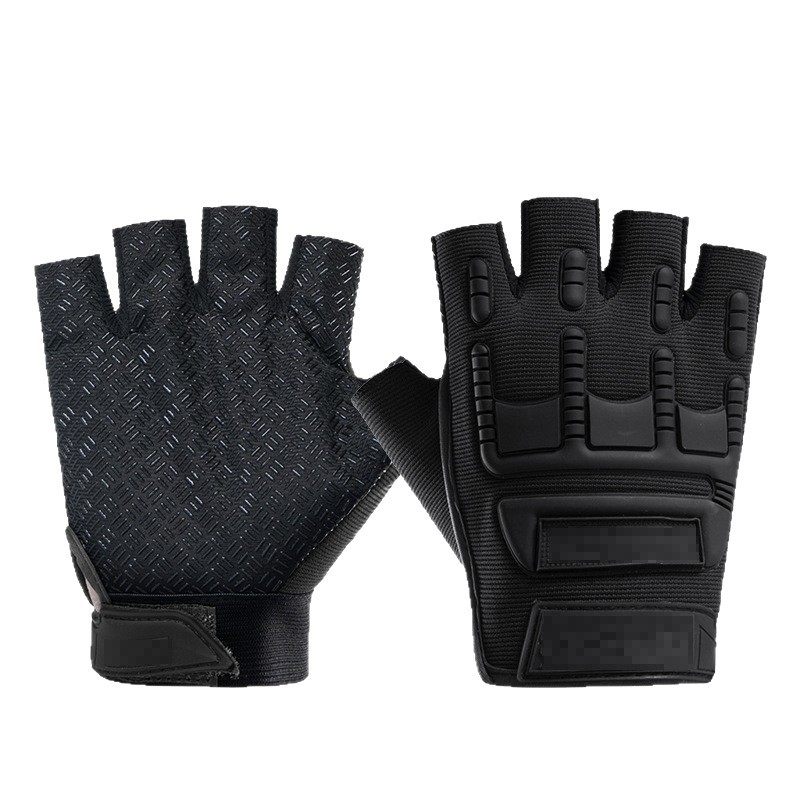
For bulk purchasers, DTC brand partners, and outdoor distributors, product differentiation starts not with features, but with why those features work. Below is a technical breakdown of tactical half-finger gloves based on material behavior, processing methods, and mechanical principles.
1. Primary Material Analysis
Stair Cloth (Textured Woven Polyester)
Unlike standard polyester, stair cloth uses a raised, honeycomb-like weave structure created during the weaving stage by varying warp tension. This texture achieves two opposing goals simultaneously:
· Air permeability – the raised points create micro-channels between fabric and skin.
· Abrasion resistance – contact stress is distributed across weave peaks rather than a flat surface.
From a B-end perspective, stair cloth typically achieves 300–500 cycles on the Martindale abrasion test (vs. ~200 for plain polyester), directly translating to longer replacement cycles for end users.
Polyester Fiber as Structural Base
Polyester is specified here for its low moisture regain (~0.4%) and high tensile strength (4–7 g/denier) . In glove applications, this means:
· No stretch-sagging after repeated sweat exposure
· UV resistance without degradation (unlike nylon, which softens under prolonged sun)
For cost-driven bulk orders, polyester also enables consistent dye uptake, reducing batch-to-batch color variation—a non-negotiable for branded DTC lines.
2. Key Functional Elements & Their Working Principles
Shock-Absorbing Soft Shell Knuckle Protection
The dorsal soft shell is not foam but a multi-layer laminate: a polyester outer, a middle EVA (ethylene-vinyl acetate) foam layer (2–3mm) , and a nylon tricot liner.
How it works:
EVA is a closed-cell foam with high rebound resilience (>60%). Upon impact, it compresses non-linearly—small forces produce little compression (maintaining dexterity), while high-impact forces trigger rapid energy dissipation across a wider area. Strategic placement avoids the metacarpophalangeal joints, preserving full finger flexion.
Silicone Anti-Slip Palm with Antibacterial Treatment
Two distinct technologies here:
Anti-slip mechanism – Liquid silicone rubber (LSR) is screen-printed onto the palm using a 60–80 mesh stencil, then heat-cured at 150–180°C. The resulting raised dots or chevron patterns multiply static friction by 2–3x compared to bare fabric, measured via coefficient of friction (COF > 1.2 on dry steel).
Antibacterial principle – This is typically a zinc pyrithione or silver-ion treatment bonded during the silicone curing stage. Unlike surface sprays, it migrates slowly to the surface, offering >99% reduction of S. aureus and K. pneumoniae over 50+ wash cycles—critical for gym and tactical users.
Breathable Ventilation System
Ventilation holes are not random. They are laser-cut (0.8–1.2mm diameter) in the finger gussets and dorsal metacarpal zone, creating a passive chimney effect: warm, humid air exits from the back, while cool air enters through the looser wrist opening. With stair cloth's 200–300 CFM air permeability, this reduces palm sweat by ~40% vs. non-vented designs at 25°C ambient.
Thin Fleece Lining
The lining uses micro-fleece (100–150 gsm, polyester-based) . Its purpose is not heavy insulation (which would defeat dexterity) but moisture buffering—the fleece's capillary action pulls sweat away from the skin, while its thin profile (≤1mm) adds no measurable loss in tactile feedback.
Adjustable Hook-and-Loop Wrist Strap
The strap uses nylon hook-and-loop (typically 20mm wide) with a pull force of 2.5–4.5 N/cm². This range prevents slippage during dynamic movement while allowing one-handed adjustment. From an inventory perspective, the 15cm adjustable circumference accommodates palm widths from 8–12cm, covering most adult sizes with one SKU.
3. Manufacturing & Quality Indicators for Bulk Sourcing
For distributors, three process-related specs matter most:
1. Seam construction – Look for flat-lock stitching (not overlock) on the palm side, which lies flatter and reduces blister risk.
2. Silicone adhesion – Request peel strength data (minimum 1.5 N/mm). Low-quality gloves delaminate after 10–15 wash cycles.
3. Fleece liner attachment – Tack bonding at fingertips prevents liner pull-out during removal.
4. Market Application Logic
The glove's performance targets specific user pain points:
· Weightlifting – Silicone palm + fleece lining reduce callus formation and bar-slip accidents.
· Cycling – EVA knuckle dampens trail vibration; half-fingers preserve gear-shift feel.
· Tactical training – Open fingers allow trigger or tool manipulation without removal.
Summary for Buyers
Material choices (stair cloth, polyester, EVA) and processes (LSR printing, laser ventilation, flat-lock seams) directly determine longevity, safety, and user satisfaction. Prioritize suppliers who can provide abrasion test reports, silicone pee.
Complete Gardening Gloves Buying Guide – Choose Proper Protection & Avoid Common Mistakes
Between the Sparks: Your Reliable Barrier of Safety