Buying Guide for Level 5 HPPE Cut Resistant Work Gloves: Selection Tips, Parameter Comparison & Common Mistakes
For gardening trimming, metal processing, material sorting and knife handling, cut-resistant gloves act as vital protection for your hands. However, the market is flooded with gloves of uneven cut-resistance grades and inferior materials. Many buyers only choose items by low price and appearance, which leads to hand cuts, easy tearing and stiff wearing experience during work. Centered on this Level 5 HPPE cut-proof glove, this guide covers core parameter comparison, practical selection standards and typical purchasing traps to help you pick durable, safety-qualified work gloves.
1. Compare Core Technical Parameters to Judge Protection Performance
EN388 Cut Resistance Rating
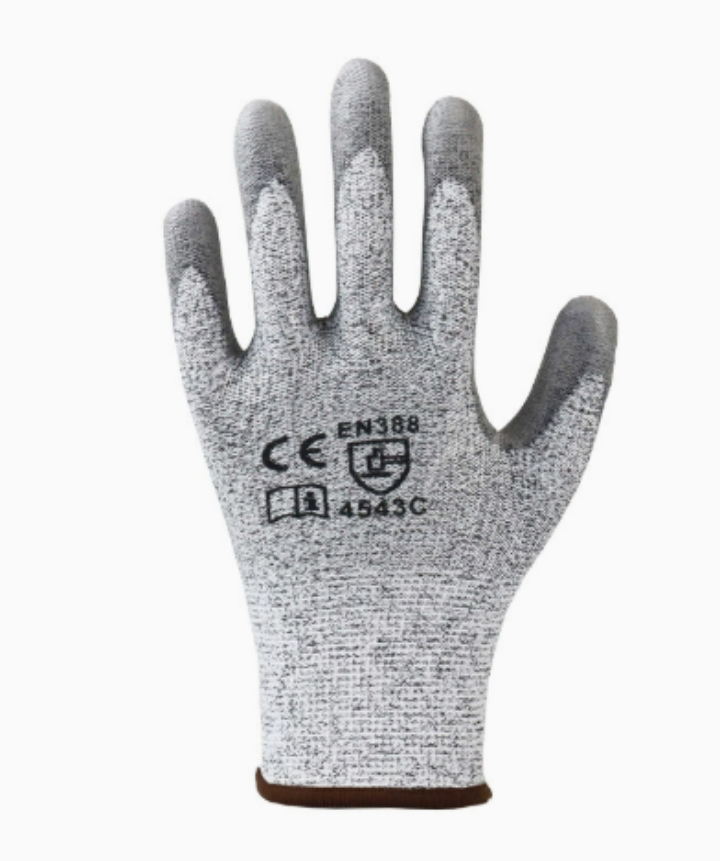
This glove is marked with EN388 4543C. The first digit 4 means level 4 abrasion resistance; the second digit 5 stands for Level 5 cut resistance, the highest civilian cut-proof grade under EU standards; the third digit 4 is level 4 tear resistance; the fourth digit 3 refers to level 3 puncture resistance, and letter C confirms standard abrasion performance. Gloves below Level 5 only suit light sorting work and fail to protect hands from sharp knives or metal scraps.
HPPE High-performance Polyethylene Liner
Premium Level 5 cut-resistant gloves are woven with HPPE yarn blend, lightweight, breathable and flexible without trapping sweat during long gardening shifts. Cheap alternatives mix excessive polyester with limited HPPE fiber. They look thick yet can be sliced easily by sharp objects. HPPE perfectly balances softness and anti-cut performance.
PU Coated Fingertips
The grey PU dip coating on fingertips delivers extra anti-slip and wear-resistant grip for holding branches and metal parts. Gloves without coating slip easily on oily workpieces. High-quality PU coating sticks firmly to liner and resists peeling after repeated friction, while cheap coating flakes off after a few uses.
Rib Cuff Hemming
The brown elastic ribbed cuff fits snugly around wrists and prevents sliding. Loose thin cuffs shift during work and create unprotected gaps on wrists.
2. Practical Inspection Methods Before Purchase
- Check Standard Markings: Qualified gloves must carry complete EN388 four-digit code and CE logo. Products without official safety labels offer no reliable protection.
- Stretch Test: Pull the palm fabric firmly. Authentic HPPE liner bounces back quickly without permanent deformation.
- Coating Durability Test: Scratch the PU fingertip hard with your nail. Qualified coating stays intact without exposing inner yarn.
- Fit Test: The gloves allow full finger movement without tightness, and elastic cuffs do not chafe wrists even for all-day wear.
3. 3 Widespread Purchasing Misunderstandings
Misunderstanding 1: Thicker gloves equal better cut protection
Thickness has no direct link to cut resistance. Thick polyester gloves contain zero anti-cut fiber, while thin Level 5 HPPE liners provide far superior safety against sharp hazards.
Misunderstanding 2: All cut-resistant gloves work for knife operation
Only gloves with Level 5 cut resistance (second digit 5 of EN388 rating) can withstand knives, broken glass and metal burrs. Grade 1-3 gloves are only fit for carton sorting and cannot be used for sharp tool work.
Misunderstanding 3: Prioritize low price over safety certification
Gloves without CE and EN388 certification offer zero legal safety guarantee. Enterprises will bear full liability for workplace hand injuries caused by unqualified gloves, bringing hidden long-term costs.
Final Conclusion
Level 5 HPPE cut-resistant work gloves are multi-scene solutions for gardening, hardware manufacturing and knife processing. When purchasing, prioritize gloves with EN388 4543C certification, high-purity HPPE liner and wear-resistant PU fingertips. Avoid wrong beliefs like “thicker is safer” and “low cost first”. Balance safety, wearing comfort and service life to fully prevent cut injuries at work.
Summer UV Protection Driving & Cycling Gloves Buying Guide
Professional Nitrile Coated Work Gloves – Material & Craftsmanship Introduction