Dot PVC Anti-slip Work Gloves Buying Guide – How to Choose, Parameter Comparison & Common Mistakes
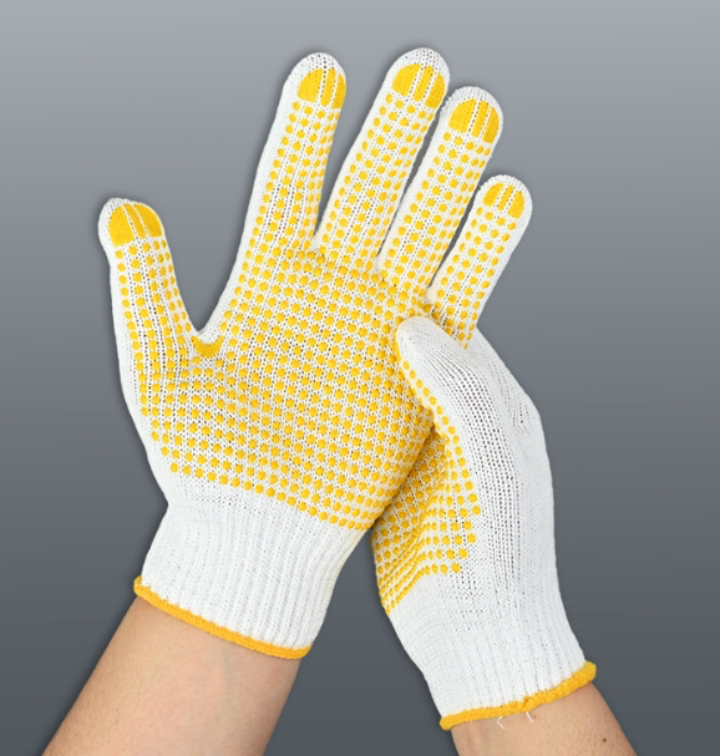
PVC dotted cotton work gloves are widely adopted in logistics handling, machinery processing, warehouse sorting and gardening tasks. Many buyers only focus on unit price while ignoring key specifications, which leads to slipping, tearing and peeling dots during daily work. This buying guide helps you select suitable gloves and balance protection and long-term cost efficiency.
First of all, you need to master core parameters for fair comparison. Standard dotted gloves consist of cotton liner and PVC anti-slip dots. Gram weight of cotton liner is the most critical indicator. Available weights range from 40g to 70g. Higher gram weight means denser yarn and better abrasion resistance. Light 40g gloves fit light-duty delicate work, while 60g–70g heavy-weight options are designed for heavy cargo handling.
You also need to distinguish single-sided dot coating and double-sided dot coating. Single-dot gloves come with lower cost, ideal for dry indoor handling. Double-sided dotted gloves can be worn either side and deliver stronger friction on slippery surfaces. Besides, check the quality of PVC dots. Premium dots are round and firmly bonded to fabric. Inferior dots are flat and easy to peel off under friction, completely losing anti-slip function.
There are three typical misunderstandings buyers frequently make. The first myth: the cheaper, the better value. Low-cost gloves usually adopt recycled cotton yarn, which frays and breaks easily. Recycled PVC dots have weak adhesion. Frequent replacement will raise overall expenditure in the long run.
The second misunderstanding: more dots equal stronger grip. Anti-slip performance relies on dot hardness and layout density. Excessively dense dots make gloves stiff and restrict finger flexibility, lowering working efficiency.
Third misconception: all dotted gloves work well in wet conditions. Ordinary PVC dots only perform under dry or slightly oily circumstances. If workers regularly contact water or cutting fluid, specially modified water-resistant coated gloves should be selected.
Match your gloves to actual working conditions. Single-sided medium-weight dotted gloves suit warehouse picking and gardening. Double-sided heavy-weight gloves are recommended for hardware transport and stone handling. You can run simple tests on samples: rub the dots hard to check peeling risk, and test grip by lifting inclined goods to verify anti-slip capability.
Reliable dotted safety gloves act as basic protection for frontline workers. Do not make purchase decisions based merely on prices. Evaluate working environments, abrasion requirements and anti-slip standards comprehensively. Avoid common traps, reduce potential workplace injuries, and achieve real cost savings.
Kids Protective Latex Gloves: A Technical Deep Dive into Materials & Craftsmanship
The Science of Winter Grip Gloves: Why Polyester Works